EBO2 stands for Extracorporeal Blood Filtration, Oxygenation and Ozonation. During the procedure, blood is circulated outside the body through a controlled, closed-loop system, where it is exposed to a precise oxygen-ozone mixture before being returned to the patient.
But what actually happens when ozone meets the blood?
From a scientific perspective, ozone does not simply “add oxygen” to the bloodstream. It creates a rapid series of biochemical reactions that may influence antioxidant defenses, cellular signaling, circulation, oxygen utilization, and inflammatory balance.
Understanding these reactions helps explain what makes extracorporeal ozone therapy different from other approaches.
Ozone Is Highly Reactive
Ozone, or O₃, is a molecule composed of three oxygen atoms. It is less stable and significantly more reactive than the oxygen we breathe, which is composed of two oxygen atoms.
When ozone encounters blood, it reacts almost immediately with components in the plasma. Its primary targets include:
- Polyunsaturated fatty acids
- Antioxidants such as uric acid and vitamin C
- Glutathione
- Albumin and other plasma proteins
- Other molecules containing reactive chemical bonds
Because these reactions occur so quickly, ozone itself is largely consumed within the extracorporeal system. Properly processed blood does not return to the patient carrying free ozone gas. Instead, it carries the biochemical products and signaling molecules created during the reaction.
This is an important distinction. Many of the proposed biological effects of EBO2 come from the body’s response to these secondary messengers, not from ozone continuing to circulate throughout the body.
Creating a Controlled Oxidative Signal
When ozone reacts with plasma, it temporarily creates reactive oxygen species and lipid oxidation products. Two of the most frequently discussed products are hydrogen peroxide and lipid-derived signaling molecules.
The word “oxidation” often has a negative connotation, but oxidation is also a normal and essential part of human biology. Cells use controlled oxidative signals to communicate, respond to stress, regulate immune activity, and activate protective pathways.
The key is dose.
Excessive oxidative stress can damage cells. A carefully controlled oxidative stimulus, however, may activate adaptive defense mechanisms. This concept is known as hormesis.
Exercise provides a familiar example. Physical activity temporarily increases oxidative and metabolic stress, but the body responds by strengthening its antioxidant defenses, improving mitochondrial function, and becoming more resilient.
Medical ozone is being studied through a similar framework. The goal is not to overwhelm the body with oxidation. It is to create a measured signal that encourages a protective response.
Hydrogen Peroxide as a Short-Lived Messenger
One of the products generated when ozone reacts with blood plasma is hydrogen peroxide.
At high concentrations, hydrogen peroxide can cause cellular damage. At low and controlled concentrations, however, it acts as a natural signaling molecule involved in metabolism, immune activity, vascular function, and cellular adaptation.
The hydrogen peroxide generated during blood ozonation is short-lived. It is quickly neutralized by antioxidant systems such as catalase, glutathione peroxidase, and peroxiredoxins.
Before it is neutralized, it may briefly interact with blood cells and influence intracellular signaling. This short oxidative pulse is believed to contribute to several of the adaptive responses associated with medical ozone.
Activating the Nrf2 Antioxidant Pathway
One of the most scientifically interesting potential effects of controlled ozone exposure is activation of the Nrf2 pathway.
Nrf2 is a transcription factor that helps regulate the body’s response to oxidative stress. When activated, it moves into the cell nucleus and influences the expression of genes associated with:
- Glutathione production
- Antioxidant enzyme activity
- Cellular protection
- Detoxification pathways
- Mitochondrial resilience
- Inflammatory regulation
Laboratory research has found that mild ozonation can activate antioxidant responses through the Keap1-Nrf2 pathway. This helps explain how a brief oxidative stimulus may ultimately strengthen the body’s ability to manage oxidative stress. [Published research]
Rather than functioning as an antioxidant itself, ozone may encourage the body to increase its own antioxidant capacity.
The Role of Lipid Oxidation Products
Ozone also reacts with polyunsaturated fatty acids in plasma, creating lipid oxidation products.
Some of these molecules remain in circulation longer than hydrogen peroxide and may act as secondary messengers after the treated blood returns to the body. They may communicate the original oxidative signal to tissues beyond the extracorporeal circuit.
These lipid-derived signals are being studied for their potential influence on:
- Antioxidant enzyme production
- Vascular function
- Immune-cell activity
- Inflammatory signaling
- Cellular stress responses
This two-stage response helps explain the potential systemic effects of EBO2. A rapid reaction occurs outside the body, followed by a broader biological response as the resulting signaling molecules circulate.
Potential Effects on Red Blood Cells
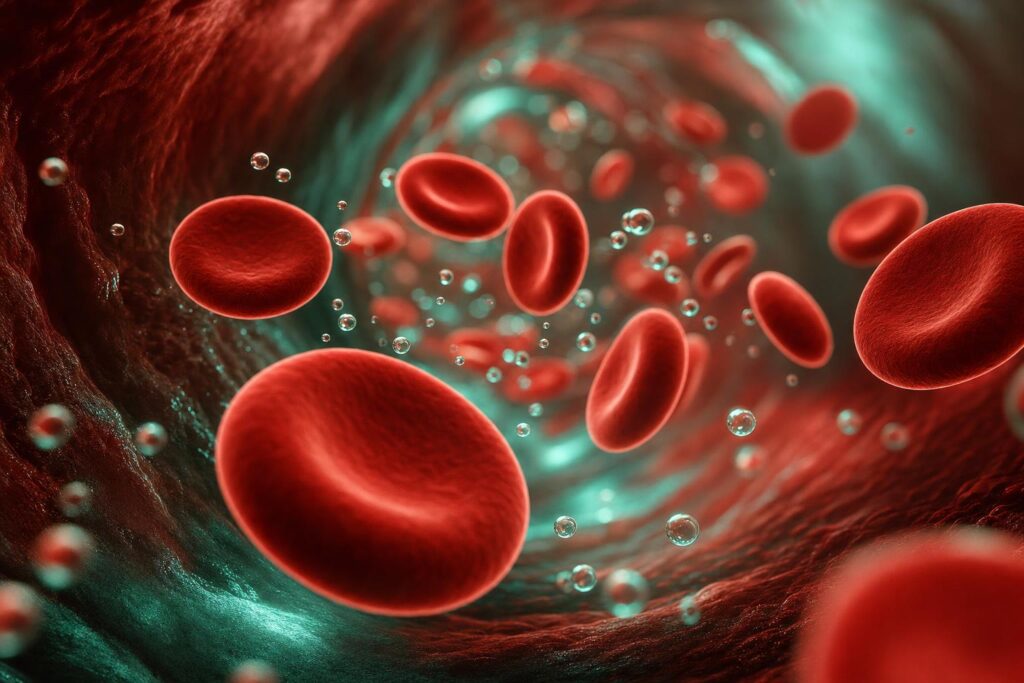
Red blood cells are responsible for transporting oxygen from the lungs to tissues throughout the body.
Controlled ozone exposure has been studied for its potential effects on red blood cell metabolism, membrane flexibility, and oxygen-delivery mechanisms. Researchers have proposed that ozone-related signaling may influence glycolysis and the production of 2,3-diphosphoglycerate, or 2,3-DPG, a molecule involved in releasing oxygen from hemoglobin.
This does not mean ozone permanently “loads” the blood with additional oxygen. The potential benefit is more closely related to how red blood cells use and release oxygen once they return to circulation.
Improved red blood cell flexibility may also support movement through small blood vessels and capillaries, although the clinical significance of these effects requires further study.
Potential Effects on Circulation
The vascular system relies on a complex network of chemical signals to regulate blood flow.
Ozone-generated messengers may influence nitric oxide pathways and endothelial function. Nitric oxide helps blood vessels relax, making it essential for circulation, tissue perfusion, and cardiovascular signaling.
By potentially supporting red blood cell behavior, vascular signaling, and oxygen utilization, extracorporeal ozone therapy may help create a more favorable environment for tissue oxygen delivery.
Supporting a Balanced Inflammatory Response
Inflammation is necessary for healing and immune defense, but persistent inflammatory signaling can contribute to chronic disease and age-related decline.
Controlled ozonation may influence inflammatory signaling through several interconnected mechanisms:
- Activation of antioxidant pathways such as Nrf2
- Modulation of redox-sensitive transcription factors
- Changes in immune-cell communication
- Effects on cytokine signaling
- Improved management of oxidative stress
The goal is not simply to suppress inflammation. It is to support a more regulated response in which the body can activate inflammation when needed and resolve it appropriately.
Why Treat the Blood Outside the Body?
The extracorporeal design of EBO2 allows the ozone-blood interaction to occur in a controlled environment.
Providers can manage variables including:
- The ozone concentration
- The oxygen-ozone ratio
- Blood-flow rate
- Exposure time
- Total blood volume processed
- Temperature and pressure within the system
- Filtration and anticoagulation protocols
This controlled exposure is essential because the biological effects of ozone depend heavily on dose and delivery.
Direct intravenous injection of ozone gas is not the mechanism used in EBO2. Instead, the oxygen-ozone mixture interacts with blood inside a specialized extracorporeal contactor. The resulting biochemical messengers, rather than free ozone gas, are returned to the patient.
A Multi-Step Biological Process
The ozone component of EBO2 can be understood as a sequence:
- Blood enters the extracorporeal system.
- A controlled oxygen-ozone mixture contacts the blood.
- Ozone reacts rapidly with antioxidants, fatty acids, and proteins in plasma.
- Short-lived reactive oxygen species and longer-lasting lipid messengers are created.
- Blood cells detect and respond to this controlled oxidative signal.
- The treated blood returns to circulation.
- Antioxidant, metabolic, vascular, and immune-response pathways may be activated.
This is why EBO2 should not be described as simply “putting ozone into the body.” It is a controlled biochemical process designed to generate a measured adaptive response.
Advancing Extracorporeal Ozone Therapy
Research into EBO2 and medical ozone continues to develop. Existing studies provide a scientific foundation for understanding how ozonation affects redox biology, but more clinical research is needed to determine how these mechanisms translate into specific patient outcomes.
At PURXCELL, we believe the future of EBO2 depends on combining advanced technology with precise protocols, comprehensive provider training, and a clear understanding of the science.
By controlling how ozone interacts with blood outside the body, EBO2 creates an opportunity to engage the body’s natural antioxidant, circulatory, metabolic, and cellular defense systems through one advanced extracorporeal process.
This article is intended for professional education. The mechanisms discussed remain areas of ongoing research and should not be interpreted as established treatment claims for any particular disease.