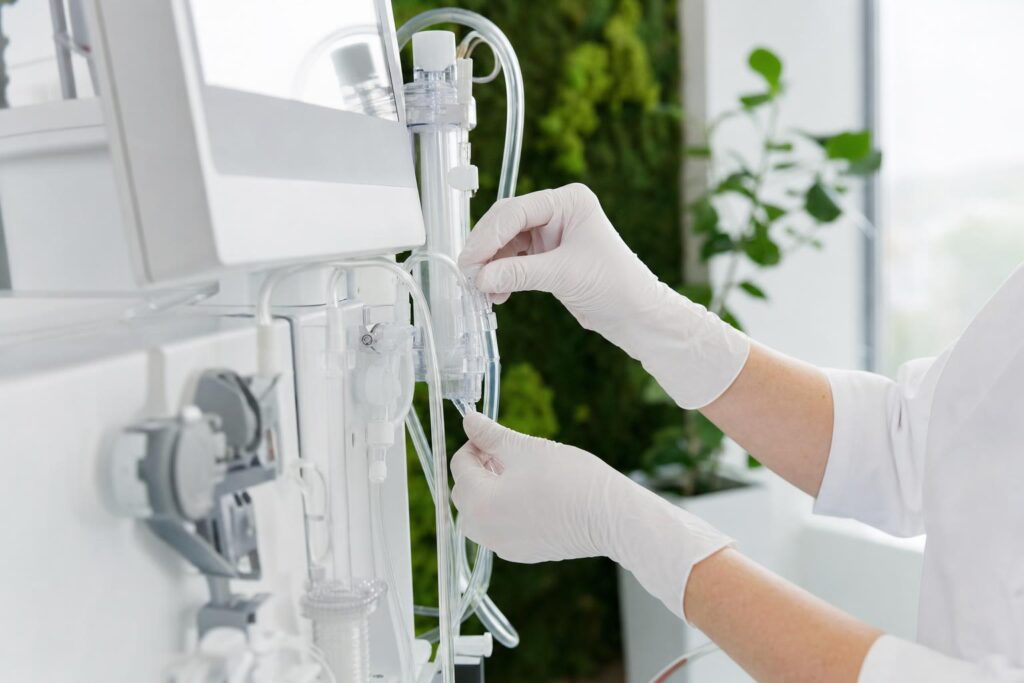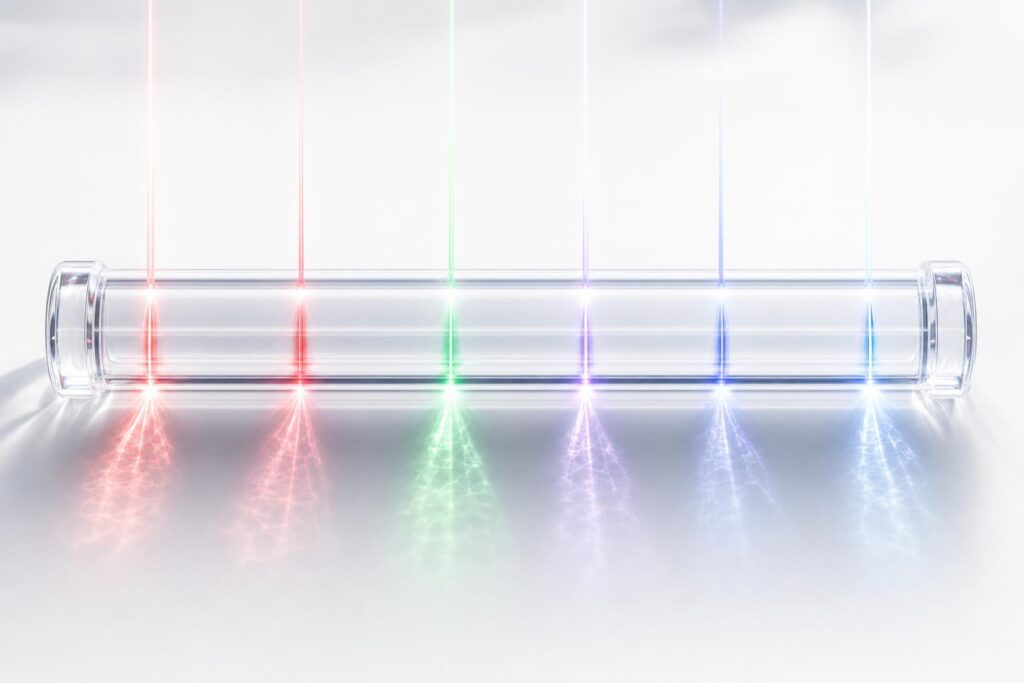
EBO2 combines extracorporeal blood filtration with controlled oxygen and ozone exposure. Hemealumen adds another dimension to this process by exposing circulating blood to six targeted wavelengths of light.
This combination brings together three complementary technologies:
- Extracorporeal blood filtration
- Controlled oxygen-ozone exposure
- Multi-wavelength photobiomodulation
Rather than applying light externally through the skin, Hemealumen delivers light directly to blood as it moves through the extracorporeal circuit. This allows the light to interact with red and white blood cells, platelets, plasma components, and cellular signaling molecules before the blood returns to the patient.
What Is Photobiomodulation?
Photobiomodulation uses specific wavelengths of light to influence biological activity.
Cells contain light-sensitive molecules called chromophores. When these molecules absorb light, they can initiate photochemical reactions that influence mitochondrial function, cellular energy production, circulation, oxidative balance, and inflammatory signaling.
Different wavelengths are absorbed by different biological targets. This means red, green, violet, and ultraviolet light do not all produce the same response.
Hemealumen uses six wavelengths across the visible and ultraviolet spectrum, including red, green, violet, UVA, and UVC ranges. By combining multiple wavelengths, the system is designed to activate a broader range of biological responses than single-wavelength light therapy.
Why Six Wavelengths?
The benefit of a multi-wavelength system is that each part of the light spectrum interacts with blood differently.
Red light
Red wavelengths are commonly studied for their effects on mitochondria, the structures responsible for producing energy within cells.
Red light may be absorbed by cytochrome c oxidase, an enzyme involved in the mitochondrial electron transport chain. This interaction may support adenosine triphosphate, or ATP, production while influencing oxidative signaling and cellular metabolism.
Hemealumen incorporates two red wavelengths to deliver photonic energy across a broader therapeutic range. When used during EBO2, these wavelengths are designed to complement the oxygenation portion of the procedure by supporting how cells utilize oxygen and produce energy.
Green light
Green light interacts with blood differently from red light because it is strongly absorbed by hemoglobin and other biological chromophores.
It is being studied for potential effects on vascular signaling, circulation, and cellular regulation. Within the Hemealumen system, green light provides another pathway through which photonic energy may influence circulating blood components.
Violet light
Violet light carries more energy than red or green light and may create different photochemical responses.
It is being studied for its interaction with porphyrins and other naturally occurring light-sensitive molecules. These interactions may influence redox balance, immune signaling, and the biological environment within circulating blood.
UVA light
UVA penetrates biological material differently from shorter ultraviolet wavelengths. In controlled extracorporeal applications, it may influence cellular signaling, immune activity, and photochemical reactions involving naturally occurring compounds in the blood.
UVC light
UVC has been extensively studied for its interaction with microorganisms and nucleic acids in controlled settings. Hemealumen uses carefully controlled extracorporeal exposure rather than directing UVC through the patient’s skin.
Its inclusion broadens the system’s photochemical capabilities and makes Hemealumen distinct from conventional red-light or ultraviolet blood irradiation systems.
Pulsed Light Delivery
Hemealumen does more than deliver six wavelengths continuously. It also uses pulsed-light technology.
Pulsing delivers light energy in controlled intervals and frequencies. This provides an additional variable beyond wavelength and intensity, allowing the system to target different biological signaling patterns.
The combination of wavelength, power, exposure time, and pulse frequency determines how light interacts with biological tissue. Hemealumen’s pulsed design is intended to provide more precise energy delivery and support a broader cellular response.
How Hemealumen Complements EBO2
EBO2 and Hemealumen work through different but potentially complementary mechanisms.
Broader cellular signaling
Ozone creates a controlled oxidative stimulus that may activate adaptive antioxidant and redox-signaling pathways. Photobiomodulation uses light-sensitive cellular targets to influence mitochondrial and biological activity.
Combining these modalities allows providers to engage multiple cellular signaling pathways during one extracorporeal procedure.
Mitochondrial and energy support
Oxygen availability alone does not determine cellular energy production. Cells must also be able to use that oxygen efficiently within the mitochondria.
Hemealumen’s red-light wavelengths are intended to support mitochondrial activity and ATP production. This may complement the oxygenation component of EBO2 and support cellular energy, recovery, and metabolic function.
Circulatory support
Photobiomodulation may influence nitric oxide signaling, red blood cell behavior, and microcirculation. These potential effects are especially relevant to an extracorporeal procedure designed around blood processing and oxygen utilization.
Inflammatory balance
Both medical ozone and photobiomodulation are being studied for their potential effects on inflammatory and antioxidant signaling.
Ozone may activate adaptive redox responses, while specific light wavelengths may influence mitochondrial activity, immune-cell communication, and cytokine signaling. Together, they may offer broader support for patients experiencing chronic inflammatory or oxidative stress.
Direct exposure of circulating blood
Traditional photobiomodulation must pass through the skin and surrounding tissues before reaching deeper biological targets.
Hemealumen is incorporated into the extracorporeal circuit, allowing light to reach circulating blood directly. This eliminates the barrier created by the skin and provides a controlled environment for consistent photonic exposure.
More Than Traditional UV Blood Irradiation
Traditional ultraviolet blood irradiation generally relies on a limited portion of the ultraviolet spectrum.
Hemealumen expands this concept by combining six wavelengths, visible and ultraviolet light, and pulsed delivery in one system. This polychromatic approach is designed to influence a wider range of biological targets than conventional single-spectrum systems.
Hemealumen does not replace the filtration, oxygenation, or ozonation components of EBO2. It adds a separate therapeutic layer to the procedure.
Building a More Comprehensive EBO2 Platform
Modern EBO2 is evolving beyond a single mechanism. By combining blood filtration, oxygen-ozone exposure, and multi-wavelength photobiomodulation, providers can deliver several complementary forms of extracorporeal blood processing within one protocol.
Hemealumen’s six wavelengths are designed to expand the cellular and photochemical effects of EBO2 by supporting:
- Mitochondrial activity and ATP production
- Oxygen utilization
- Circulatory and nitric oxide signaling
- Antioxidant defenses
- Immune and inflammatory balance
- Broader photochemical activity within circulating blood
At PURXCELL, we believe this type of integrated technology represents the next generation of EBO2. Hemealumen gives providers an additional way to customize and enhance the procedure while continuing to advance the study of extracorporeal photobiomodulation.
Hemealumen and EBO2 should be used only by appropriately trained medical professionals under physician-directed protocols. Potential mechanisms and benefits remain areas of ongoing scientific and clinical investigation.